
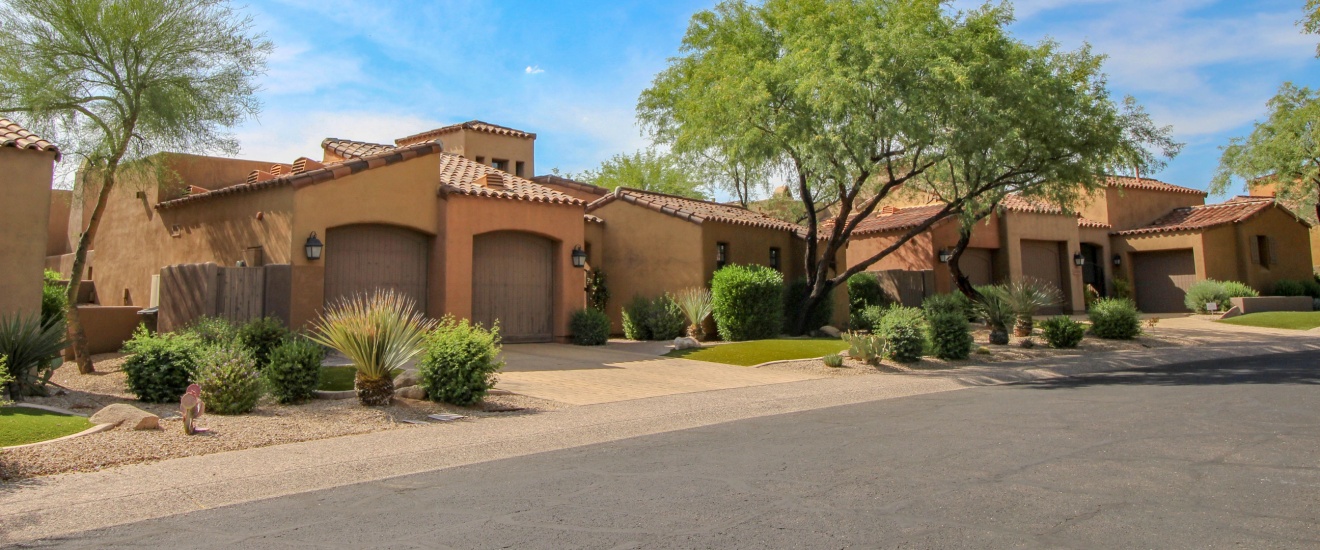
Mesa stretches across a large portion of the East Valley, and its eastern and southern edges border undeveloped desert land, open agricultural areas, and desert preserves. Homes in these areas—particularly those in neighborhoods near the Usery Mountain Regional Park corridor, the eastern edges of Mesa near Signal Butte Road, and the southern developments approaching the San Tan Valley boundary—consistently experience more pest activity than properties in the interior of established neighborhoods. The reasons are predictable and directly tied to what is living in the desert land adjacent to these properties.
Direct Exposure to Desert Pest Populations
Undeveloped desert land in the East Valley supports established populations of bark scorpions, roof rats, black widow spiders, coyotes, rattlesnakes, and a wide range of insects. These populations are not contained by property lines. Scorpions travel along block walls and through landscaping from desert land into residential yards. Roof rats use tree canopy and wall tops to move from open land into neighborhoods. Insects emerge from desert soil and vegetation and disperse into surrounding residential areas.
Properties with a direct interface between their yard and undeveloped desert—backing up to a wash, a preserve boundary, or open land—have the most consistent exposure. But the effect extends beyond the immediate boundary. Pest species that originate in desert areas move through neighborhoods along block walls and landscaping corridors, meaning homes several blocks from the desert edge still experience elevated activity compared to properties in more developed, interior locations.
Scorpions
Bark scorpion populations in undeveloped desert areas adjacent to Mesa neighborhoods are established and dense. Scorpions move from desert land into residential areas along block walls, through shared landscaping, and directly across yards that border open land. Properties at the desert edge in Mesa have higher scorpion activity than interior properties, and that activity is persistent rather than seasonal—scorpions are present in these areas year-round.
The combination of desert-adjacent harborage, abundant insect food sources in undeveloped land, and the block wall travel networks connecting desert to residential areas creates conditions that make scorpion management an ongoing necessity for these homeowners rather than an occasional concern.
Roof Rats
Desert washes and the vegetation corridors that run through and alongside undeveloped land in eastern and southern Mesa are travel routes for roof rats. Rats move from open land into residential areas along these corridors, using tree canopy, wall tops, and dense vegetation as cover. Neighborhoods that border or are close to desert washes consistently report higher roof rat activity than those in more developed areas of Mesa.
The combination of citrus trees in residential yards—a reliable food source—and the proximity to open land where established rat populations exist creates conditions that sustain ongoing roof rat activity in these neighborhoods.
Insects and Cockroaches
Desert-adjacent properties in Mesa have higher insect diversity and density than interior properties simply because the undeveloped land next to them supports insect populations year-round. Turkestan cockroaches, crickets, and a range of other insects move between desert areas and residential yards consistently. Higher insect activity around desert-edge properties also means more food for scorpions and spiders, which contributes to elevated activity across multiple pest species simultaneously.
What Mesa Homeowners Near Desert Areas Should Do
Managing pest activity on desert-adjacent properties requires consistent professional treatment rather than a reactive response. The source of pest activity—undeveloped land—cannot be addressed, which means the focus must be on creating and maintaining effective barriers around the structure and reducing the harborage and food sources on the property itself.
Professional perimeter treatments applied on a regular schedule, combined with harborage reduction and entry point sealing, provide the most reliable protection for Mesa homes in these high-activity areas. Veterans Choice Pest Solutions serves Mesa homeowners throughout the city, including properties near desert areas where pest activity is most consistent. Contact us for a free quote to get a treatment plan in place for your property.