
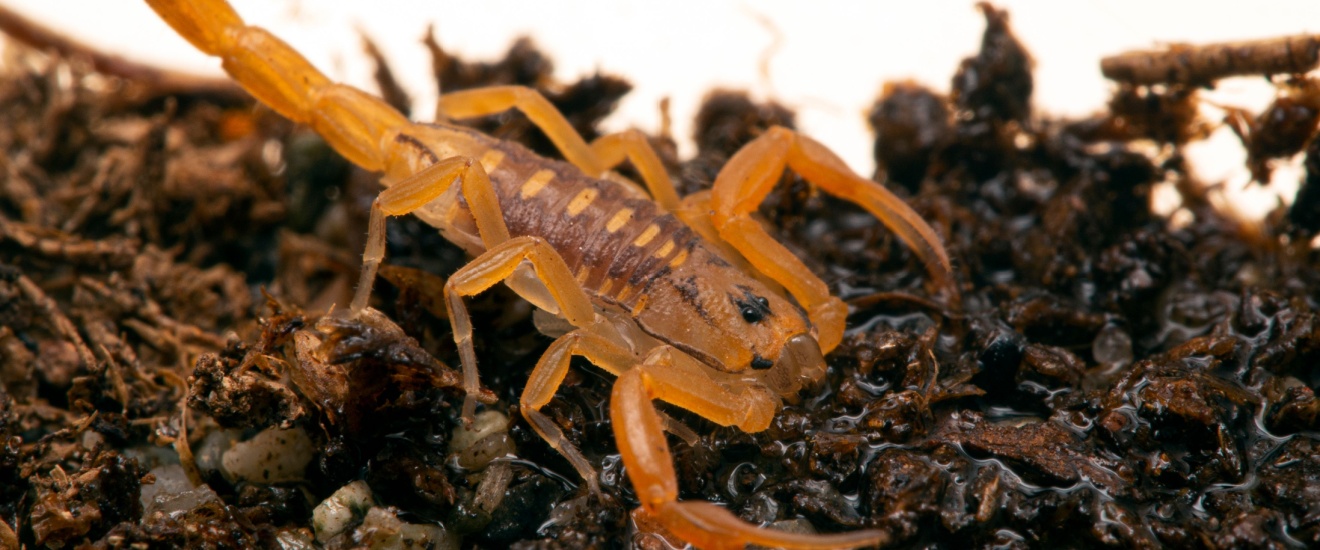
As daylight fades and the desert begins to cool, Gilbert residents often notice an increase in scorpion sightings. Bark scorpions, the most common and concerning species in the area, are nocturnal by nature and thrive under summer conditions. The combination of lingering warmth, seasonal humidity, and abundant insect prey makes nighttime the perfect window for them to emerge from hiding. While they remain tucked away during the day in block walls, landscaping, or shaded crevices, evenings bring them out in search of food, mates, and shelter. This surge in activity explains why summer nights are the period when homeowners are most likely to encounter scorpions both outdoors and inside their homes.
Nightfall Unlocks Their Instincts
Bark scorpions are creatures of the night, and their entire biology is tuned to darkness. During the day, they remain concealed in tight, shaded spaces such as block walls, garage corners, beneath landscaping rock, or inside tree bark. This behavior is a survival tactic that allows them to conserve energy and avoid predators. Their ability to stay hidden for long stretches of daylight makes them difficult for homeowners to detect, giving the false impression that scorpions are absent when in reality they are simply waiting for the right conditions.
When dusk arrives, their instincts shift dramatically. The cover of night provides safety, and cooler air gives them the confidence to roam freely. Gilbert homeowners often notice scorpions appearing suddenly after sunset, moving across patios or garage floors. This isn’t coincidence; it’s the natural rhythm of their nocturnal lifestyle. Their bodies are adapted to thrive in low-light conditions, with heightened sensitivity to vibrations and an uncanny ability to locate prey in the dark. This makes them far more effective hunters at night than during the day.
The timing matters because scorpions are opportunistic predators. Twilight is when they emerge to feed, mate, and explore, taking advantage of insects drawn to porch lights or moisture-rich areas. For residents, this means the hours after sunset are the most dangerous, as scorpions are not only more visible but also more active in their search for food and shelter. The overlap between human evening routines and scorpion instincts explains why encounters spike during these hours, reinforcing the need for vigilance once daylight fades.
Heat Relief Fuels Movement
Arizona summers are notorious for extreme heat, often climbing past 110°F. Even desert-adapted creatures like scorpions cannot sustain activity under such punishing conditions. To survive, they remain tucked away in shaded crevices, conserving energy until the environment becomes more tolerable. This daytime stillness is deceptive, as it gives homeowners the impression that scorpions are inactive, when in reality they are simply waiting for the right moment to emerge.
As the sun sets, the temperature drops just enough to create a window of opportunity. Warm evenings provide the balance scorpions need, still hot enough to keep them active yet cool enough to allow movement across patios, garages, and yards without overheating. This relief from daytime extremes explains why scorpions are most mobile once the sun goes down. For Gilbert residents, this means scorpions are not only more likely to be seen at night but also more likely to travel farther, increasing the chances of sightings in outdoor spaces and even inside homes.
Monsoon Moisture Creates a Buffet
Summer monsoon storms and routine irrigation around Gilbert homes create pockets of humidity that attract insects like crickets, beetles, and cockroaches. For scorpions, this surge in prey is irresistible. The damp conditions act like a magnet, drawing insects closer to residential areas and, in turn, pulling scorpions into neighborhoods where food is abundant. This seasonal buffet transforms backyards into hunting grounds, with homeowners often noticing scorpions clustering near irrigation boxes, rock beds, or patios where insects gather after rain or watering.
The connection between moisture and scorpion activity is critical. Without humidity, insect populations decline, and scorpions remain less active. But with monsoon rains and irrigation, food sources spike, and scorpions respond by intensifying their nightly hunts. For Gilbert families, this means summer evenings are not only warmer but also busier with scorpion activity, as the abundance of prey ensures scorpions will continue to roam closer to homes in search of easy meals.
Neighborhood Structures Double as Hideouts
Gilbert’s suburban design unintentionally favors scorpions by offering them an abundance of man-made shelters. Block walls mimic natural rock crevices, decorative landscaping provides shaded retreats, and palm or citrus trees offer vertical cover. These structures give scorpions daytime hiding places that are cool, dark, and undisturbed, allowing them to remain concealed until nightfall. Because these features are so common in neighborhoods, scorpions can thrive right alongside families without being noticed during the day.
Unlike open desert terrain, residential areas combine shelter with easy access to food. A scorpion tucked inside a block wall or beneath a patio stone during the day can emerge at night to hunt insects attracted to porch lights or irrigated lawns. This blend of protection and opportunity makes suburban neighborhoods ideal environments for scorpions to establish themselves. For homeowners, this means scorpions are not simply passing through but are living within the same structures that make neighborhoods appealing to people, increasing the likelihood of encounters during summer nights.
Nighttime Wanderers Slip Indoors
Scorpions don’t always remain outdoors. Their heightened nighttime activity makes them more likely to wander inside through tiny gaps, vents, or cracks that often go unnoticed. Bedrooms, bathrooms, and closets can become accidental resting spots, especially when scorpions follow cool air currents or chase prey into the home. This explains why late-night discoveries often happen in unsettling places such as shoes, bedding, or tucked-away corners, catching families off guard.
The risk is compounded by the persistence of scorpions once they enter. They may remain concealed for hours, only emerging when disturbed, which makes encounters indoors particularly stressful. Their ability to slip inside unnoticed means homeowners must be vigilant about sealing entry points and monitoring activity. For Gilbert families, this overlap between scorpions’ nocturnal habits and human living spaces highlights why summer nights carry a greater chance of run-ins, reinforcing the need for consistent prevention measures.
Vibrations and Human Activity Draw Them In
Summer nights in Gilbert often mean backyard barbecues, kids playing late, or families gathering outdoors. Scorpions are highly sensitive to vibrations in the ground, and human activity can unintentionally draw them closer. The movement of footsteps, the thumping of music, or even pets roaming the yard creates disturbances that scorpions investigate. What feels like harmless summer fun to residents can actually signal opportunity to these nocturnal hunters, prompting them to move toward areas where people are most active. This overlap between human routines and scorpion behavior explains why sightings spike during summer evenings, especially in yards and patios where activity is concentrated.
The irony is that the very activities that make summer nights enjoyable also increase the likelihood of scorpion encounters. Outdoor dining, social gatherings, or late-night relaxation often coincide with peak scorpion activity, creating a higher chance of run-ins. For Gilbert families, this means summer nights require not only enjoyment but also caution. Awareness of how vibrations and movement attract scorpions helps homeowners take preventive steps, such as reducing clutter in outdoor spaces, sealing entry points, and keeping lighting and activity areas away from potential hiding spots. By understanding this connection, residents can better protect themselves while still enjoying the warm evenings.
Seasonal Breeding Cycles Intensify Activity
Summer marks the height of bark scorpion reproduction, and this natural cycle dramatically increases their visibility around homes. Male scorpions become far more mobile during this season, roaming across larger territories in search of mates. Their wandering behavior means they are more likely to cross paths with residential areas, patios, and even indoor spaces. At the same time, females carrying young are driven to secure reliable food sources and safe harborage sites, which often leads them closer to human structures. This dual surge in activity—males searching and females protecting—creates a perfect storm of scorpion presence during summer nights.
The breeding cycle also changes the way scorpions behave. Females with offspring are more defensive, guarding their young against threats and becoming less likely to retreat when disturbed. Homeowners may notice scorpions lingering longer in certain areas or appearing bolder than usual. Meanwhile, males are relentless in their search, covering more ground than at any other time of year. This combination of protective females and roaming males amplifies the risk of run-ins, especially in neighborhoods where food and shelter are abundant. For Gilbert families, it explains why scorpions seem more aggressive and persistent during the hottest months.
Breeding season has long-term consequences that extend past the summer. Each successful mating increases the local population, ensuring that scorpions will remain a recurring issue in future seasons. Young scorpions born during this period grow quickly, adding to the numbers that will be active in the months ahead. Without professional control measures, this cycle compounds year after year, making infestations harder to manage. For homeowners, recognizing the impact of breeding surges is critical—it highlights why summer nights are not just a temporary nuisance but the foundation of larger problems that require proactive solutions.
Why Peak Scorpion Season Requires More Than DIY Control
DIY fixes such as sprays, traps, or quick home remedies often feel like the easiest way to deal with scorpions. The problem is that bark scorpions are far more resilient than most homeowners realize. They squeeze through cracks no wider than a credit card, hide deep inside block walls, and thrive in shaded corners where surface treatments rarely reach. What looks like progress one night often turns into disappointment the next, as scorpions return undeterred.
Summer raises the stakes even higher. Monsoon rains bring more insects, breeding cycles push scorpions to roam farther, and cooler evenings give them the perfect window to invade. A single untreated entry point can quickly turn into repeated sightings indoors, leaving families uneasy and wondering why the problem will not go away. DIY methods simply do not account for the scale and persistence of peak season activity.
Veterans Choice Pest Solutions provides a different level of protection. As a veteran-owned company, we apply discipline, precision, and strategies designed specifically for Arizona homes. Our team inspects thoroughly, identifies hidden harborage areas, and delivers targeted treatments that break the cycle of nightly activity. We understand the unique pressures Gilbert families face during summer nights, and we are committed to helping residents live comfortably without the constant worry of scorpions.
Contact us today to put a year-round protection plan in place and keep your home resilient during Gilbert’s peak scorpion season.