
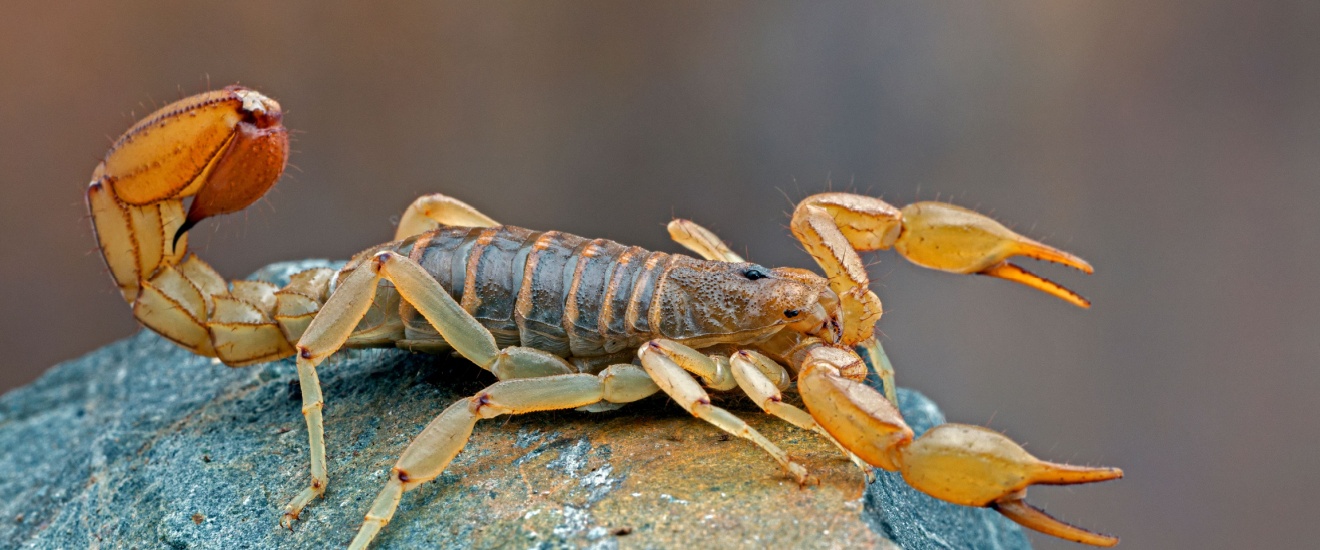
The East Valley is home to several scorpion species, but not all of them present the same level of concern for homeowners. Understanding which species are present in Gilbert, Mesa, and Chandler—and how they differ—helps homeowners assess the risk they are dealing with and make informed decisions about treatment. Veterans Choice Pest Solutions provides scorpion control throughout the East Valley, and the species below are the ones our technicians encounter most frequently on local properties.
Arizona Bark Scorpion
The Arizona bark scorpion (Centruroides sculpturatus) is the species that matters most for East Valley homeowners. It is the most venomous scorpion in the United States, and it is the most common scorpion encountered inside homes in Gilbert, Mesa, and Chandler. Its sting causes intense pain, numbness, and tingling and can produce more severe reactions in children, elderly adults, and individuals with compromised immune systems. Severe stings may require medical treatment.
Bark scorpions are tan to light brown, slender, and typically one to three inches long. They are distinguished from other local species by their ability to climb—they scale stucco walls, block fences, and interior walls with ease and are commonly found on ceilings and walls inside homes rather than only on the floor. They shelter in tight, dark spaces during the day and hunt at night.
Bark scorpions are most concentrated in areas adjacent to undeveloped desert land but are present throughout established neighborhoods in all three cities.
Arizona Hairy Scorpion
The Arizona hairy scorpion (Hadrurus arizonensis) is the largest scorpion species in North America, reaching up to six inches in length. Despite its imposing size, its venom is significantly less potent than the bark scorpion’s—its sting is painful but is generally compared to a bee sting in severity for healthy adults.
Hairy scorpions are burrowing species and are more commonly encountered in yards, under rocks, and in desert areas than inside structures. They are occasionally found in garages and ground-level spaces but are far less likely to be found inside living areas than bark scorpions. Their large size makes them startling to encounter, but they represent a lower medical risk than their smaller counterpart.
Stripe-Tailed Scorpion
The stripe-tailed scorpion (Paravaejovis spinigerus) is a mid-sized species common throughout Arizona. It is brown with distinct stripes along the underside of its tail—the feature that gives it its name. Its venom is less potent than the bark scorpion’s, producing localized pain and swelling in most cases.
Stripe-tailed scorpions are ground-dwellers that prefer rocky terrain and desert areas. They are encountered in yards and around the exterior of homes in the East Valley but are less likely to enter structures than bark scorpions. They are most active at night and are frequently found under rocks, in leaf litter, and along block wall bases.
Yellow Ground Scorpion
The yellow ground scorpion (Paravaejovis confusus) is a small, pale yellow species found throughout the Sonoran Desert region. It is a burrowing species and is most commonly encountered in desert soil and sandy areas. Its sting is mild and is not a significant medical concern for healthy adults. It is the least commonly encountered of the East Valley species in residential settings.
Which Species Should Gilbert, Mesa, and Chandler Homeowners Be Most Concerned About
The bark scorpion is the species that warrants the most attention and the one that professional scorpion control programs in the East Valley are primarily designed to address. The other species present in the area are far less likely to enter structures and pose a significantly lower medical risk.
If scorpions are present on your East Valley property, professional identification and targeted treatment provides the most reliable protection. Contact Veterans Choice Pest Solutions for a free quote.