
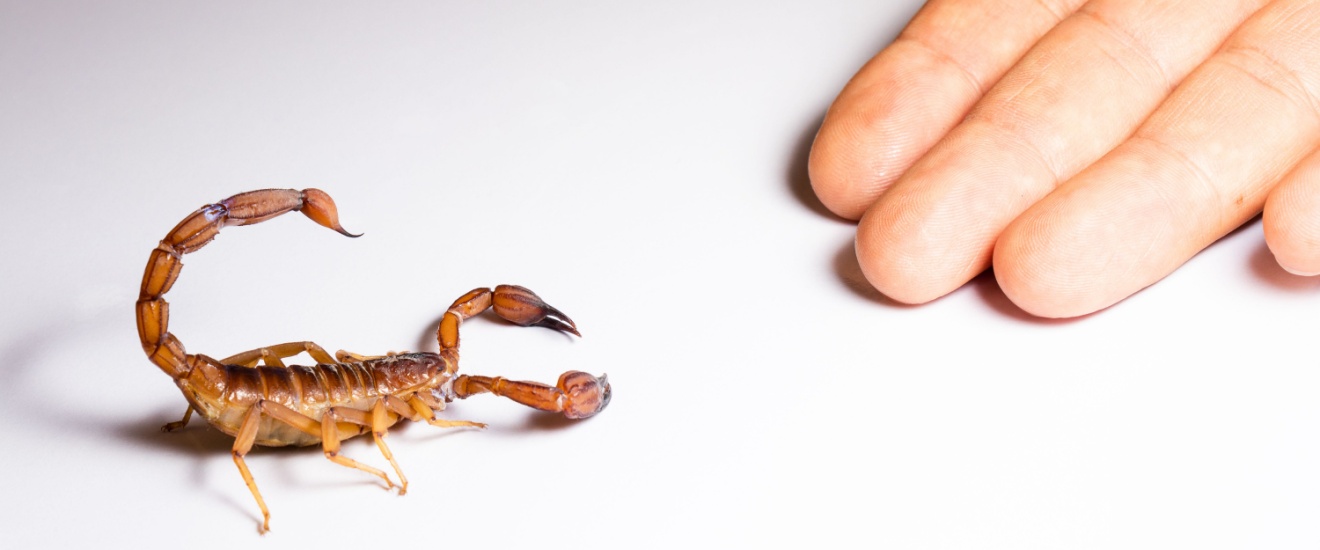
Scorpions are one of the most common and most serious pest concerns for homeowners in Gilbert and the broader East Valley. The bark scorpion—the species most frequently encountered in this area—is the most venomous scorpion in the United States, and its sting can cause significant pain, numbness, and, in some cases, more severe reactions, particularly in children and older adults. Effective scorpion control in Gilbert requires understanding how these animals behave, where they come from, and what treatment approaches actually work.
Veterans Choice Pest Solutions provides scorpion control throughout Gilbert and the East Valley, and the information below reflects what we see on local properties every day.
Understanding the Bark Scorpion
The Arizona bark scorpion (Centruroides sculpturatus) is the species responsible for the vast majority of scorpion encounters in Gilbert homes. It is tan to light brown, slender, and typically one to three inches in length. Unlike most scorpion species, the bark scorpion is an excellent climber—it can scale stucco walls, climb block fences, and access elevated areas that ground-level scorpions cannot reach. It is commonly found on walls and ceilings inside homes, which surprises homeowners who expect to find scorpions only on the floor.
Bark scorpions are nocturnal. They shelter in dark, tight spaces during the day and hunt at night. Inside a home, common daytime harborage locations include inside shoes, folded clothing, behind baseboards, under furniture, and inside boxes stored in closets and garages.
Where Scorpions Come From
Scorpions in Gilbert neighborhoods originate from the surrounding desert environment. Gilbert sits at the edge of the Sonoran Desert, and the undeveloped land adjacent to and between neighborhoods supports established scorpion populations. Scorpions move into residential areas along block walls, through landscaping, and directly from adjacent desert land.
Properties at the edges of developments—those backing up to desert preserves, undeveloped lots, or open land—consistently have higher scorpion activity than properties in the interior of established neighborhoods. However, even interior properties are not immune, because scorpions travel along block walls and through shared landscaping across entire subdivisions.
Effective Scorpion Control Methods
Perimeter Treatment
Regular professional perimeter treatments are the foundation of effective scorpion control in Gilbert. Treatments applied to the exterior of the structure, along the foundation, around entry points, and on block walls reduce the scorpion population that is actively foraging around the home. Because scorpions pick up product through contact as they move across treated surfaces, consistent application on a scheduled basis—rather than one-time treatment—provides the most reliable protection.
Sealing Entry Points
Keeping scorpions out of the interior of the home requires addressing the gaps and openings they use to enter. Common entry points include gaps around plumbing penetrations under sinks and where pipes enter through walls, gaps under doors without adequate door sweeps, weep holes in brick or block construction, and gaps around window frames where caulk has deteriorated. Sealing these points reduces interior encounters significantly.
Harborage Reduction
Scorpions need shelter during daylight hours. Reducing the harborage available around a home limits the population that can establish itself nearby. Practical steps include:
- Keeping decorative rock and mulch beds away from the foundation
- Removing woodpiles, debris, and stored materials from against exterior walls
- Keeping grass and ground cover trimmed at the foundation perimeter
- Clearing leaf litter from under shrubs and along block walls
Addressing the Food Supply
Scorpions eat insects—primarily crickets, roaches, and other arthropods. Properties with high insect populations have more food available to sustain scorpion populations. Exterior lighting attracts insects, particularly crickets, which are a primary food source for bark scorpions. Switching exterior lights to yellow or sodium vapor bulbs, which are less attractive to insects, reduces the food supply around the home.
When Scorpions Are Most Active in Gilbert
Scorpion activity in the East Valley peaks from April through October, with the highest activity in the hot summer months of June, July, and August. However, scorpions are present year-round in the Gilbert area and can be encountered in any month. Treatment programs should run year-round rather than only during peak season.
Professional Scorpion Control in Gilbert
Consistent, professional treatment is the most reliable path to reducing scorpion activity in a Gilbert home. Over-the-counter products provide limited and short-lived results compared to professional-grade treatments applied by trained technicians who know where and how to target scorpion activity on local properties.
Veterans Choice Pest Solutions serves Gilbert homeowners with scorpion control programs designed for the specific conditions of the East Valley. Request a free quote to get started.