
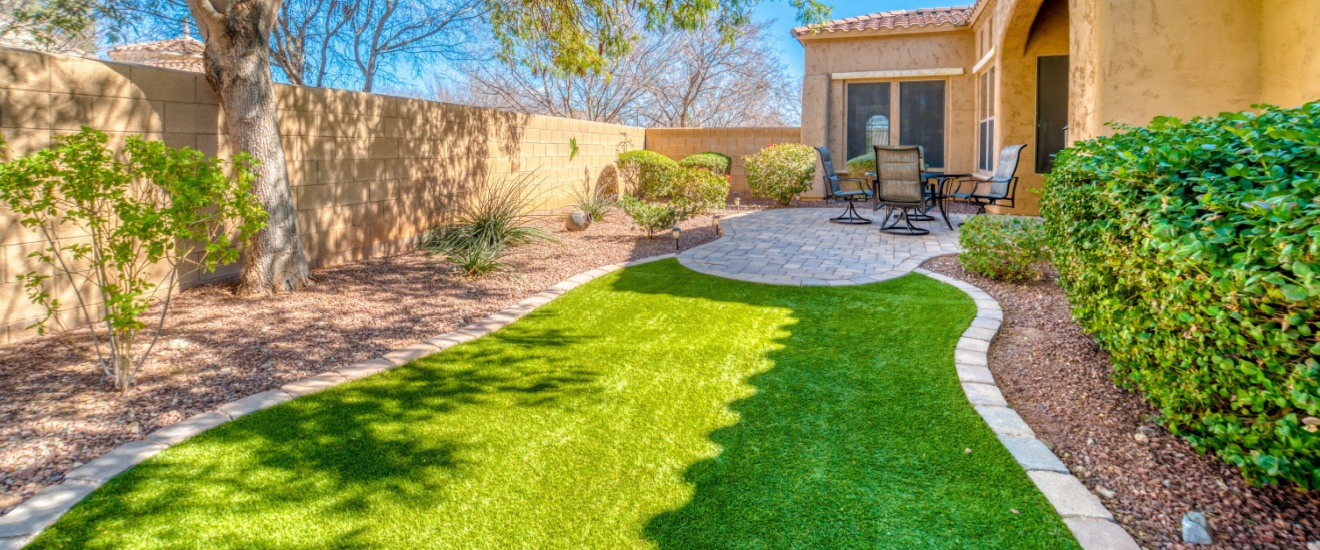
Artificial turf has become one of the most popular landscaping choices in Mesa and across the East Valley—and for understandable reasons. It eliminates water bills, stays green year-round, and requires no mowing. What many homeowners do not realize until after installation is that artificial turf creates specific pest conditions that natural grass and desert landscaping do not. Several pest species are more active around artificial turf than around other landscaping types, and understanding why helps Mesa homeowners manage the problem effectively.
Veterans Choice Pest Solutions provides pest control throughout Mesa and the East Valley, including properties where artificial turf has contributed to pest activity.
How Artificial Turf Creates Pest Habitat
Artificial turf is installed over a base layer of decomposed granite, crushed rock, or compacted soil, with a layer of infill material—typically crumb rubber or silica sand—spread across the turf surface. Over time, organic debris accumulates in and around the turf: leaf litter, dead insects, pet waste, food particles, and soil blown in from surrounding areas. This decomposing organic material at and below the turf surface creates conditions that several pest species find attractive.
The turf itself also retains heat. In Mesa’s climate, artificial turf surface temperatures on a summer afternoon can reach well above 150 degrees Fahrenheit. While this discourages some pest activity during peak heat hours, the retained warmth during evening and nighttime hours creates a comfortable environment for nocturnal pests—including scorpions and cockroaches—that are most active after dark.
Scorpions
Scorpions are the most significant pest concern associated with artificial turf in Mesa. The edges where turf meets the foundation, block walls, or landscape borders create sheltered gaps that bark scorpions use for daytime harborage. The infill material beneath the turf surface, particularly crumb rubber, creates a dark, protected environment below the turf that scorpions can access through gaps at seams and edges.
Homeowners with artificial turf who walk barefoot in their yards at night are at higher risk of scorpion encounters than those with desert rock or natural grass. The turf surface conceals scorpions that are resting or hunting at ground level in ways that open rock or soil does not.
Cockroaches
American cockroaches and Turkestan cockroaches—the two species most commonly encountered in Mesa yards—are attracted to the organic debris that accumulates in artificial turf over time. Decomposing leaf litter, food particles, and pet waste provide food and moisture that sustain cockroach populations. Cockroaches sheltering in and under the turf at night move toward structures as they forage, and proximity to the foundation increases the likelihood of indoor entry.
Roof Rats
Artificial turf near fruit trees creates a concentrated feeding area for roof rats. Fallen citrus and other fruit that lands on turf is easier for rats to access and consume than fruit that falls onto natural soil and becomes partially buried or concealed. Homeowners who have both artificial turf and citrus trees in Mesa consistently report higher rat activity in their yards than those with one or neither.
Ants
Several ant species in Mesa nest in the soil beneath artificial turf. The protected, stable environment under turf is attractive to fire ants and other ground-nesting species. Ant activity under turf is often not noticed until mounds push up through seams or turf edges, or until ants are observed trailing from the turf toward the structure.
Managing Pest Activity Around Artificial Turf
Several steps reduce pest activity in and around artificial turf installations:
- Rinse the turf surface regularly to remove organic debris and reduce the material that cockroaches and other pests feed on
- Keep turf edges sealed tightly against the foundation and block walls to eliminate the gap harborage that scorpions use
- Pick up fallen fruit from citrus trees promptly rather than allowing it to accumulate on the turf surface
- Apply professional perimeter treatment along turf edges and the foundation perimeter on a regular schedule
Artificial turf does not create pest problems in isolation—it creates conditions that amplify pest activity that is already present in the surrounding environment. Managing that activity requires consistent professional treatment calibrated to the specific pests active on your property.
Veterans Choice Pest Solutions serves Mesa homeowners with pest control programs that account for artificial turf and other landscape features specific to East Valley properties. Contact us for a free quote.