
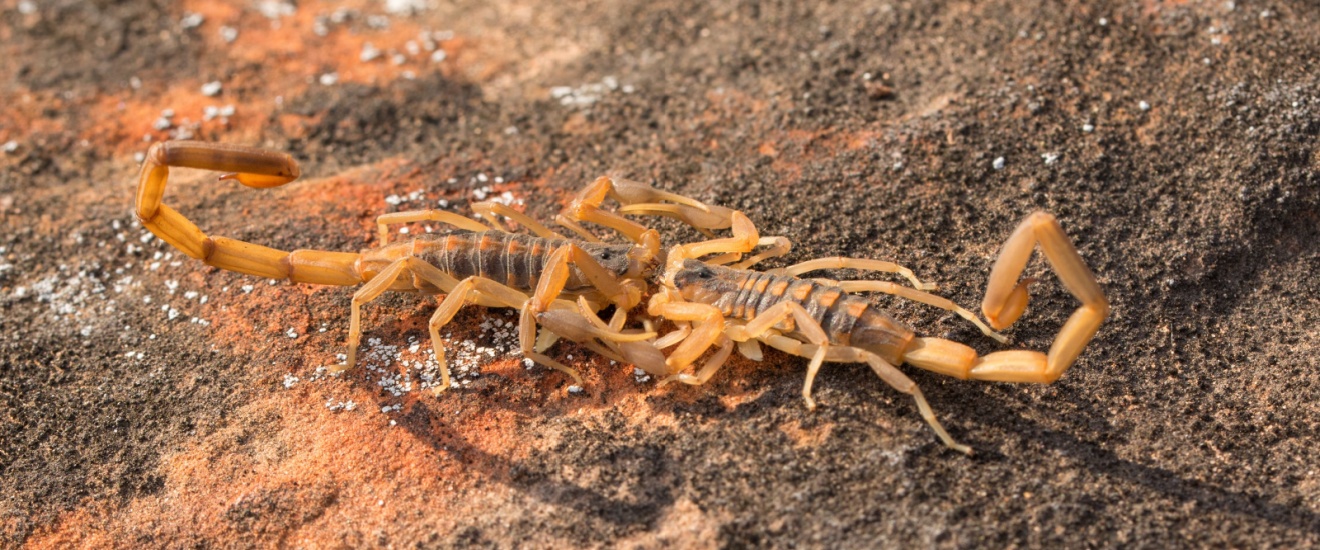
Specific conditions in East Valley backyards attract scorpions and keep them there. They are drawn by specific conditions that provide what they need to survive—shelter, food, moisture, and access to structures. Understanding what attracts scorpions to a property is the starting point for reducing their presence. Veterans Choice Pest Solutions serves Gilbert, Mesa, Chandler, and the surrounding East Valley, and the attractants described below are the ones we identify most consistently during property inspections.
Harborage: Places to Hide During the Day
Scorpions are nocturnal. During daylight hours they need shelter—dark, tight spaces where they can rest undisturbed and stay cool. A backyard that provides abundant harborage sustains a larger scorpion population than one that does not.
The most common harborage sources in East Valley backyards include:
- Decorative rock and river rock landscaping: Rock beds, particularly those placed directly against the foundation or along block walls, are ideal scorpion shelter. Scorpions rest beneath rocks during the day and move out to hunt at night.
- Woodpiles and stacked materials: Firewood, lumber, stacked pavers, and any stored materials against an exterior wall provide sheltered, ground-level harborage that scorpions actively seek.
- Debris and leaf litter: Accumulated leaves, dead vegetation, and ground debris along block walls and fence lines create harborage that scorpions use consistently.
- Block walls: The hollow cores of standard concrete block walls used throughout East Valley neighborhoods provide protected travel corridors and daytime shelter for bark scorpions.
- Artificial turf edges: The gap between artificial turf and adjacent surfaces—foundations, block walls, and landscape borders—creates sheltered spaces that scorpions use regularly.
Food: Insects and Other Prey
Scorpions are predators that eat insects and other arthropods. A backyard with high insect activity supports a larger scorpion population than one with lower insect counts. The food sources most consistently associated with elevated scorpion activity in East Valley backyards include:
- Crickets: Crickets are one of the primary food sources for bark scorpions in Arizona. Exterior lighting attracts crickets at night, which in turn attracts scorpions. Properties with bright exterior lighting along wall bases and near entry points consistently have more scorpion activity than those with minimal exterior lighting.
- Roaches: Turkestan cockroaches and American cockroaches, both common in Mesa, Gilbert, and Chandler yards, are prey species for scorpions. A property with a significant outdoor cockroach population is also sustaining a scorpion food source.
- Other insects around citrus and fruit trees: Fallen citrus attracts a range of insects that scorpions feed on. Properties with citrus trees that drop fruit regularly have more insect activity and more scorpion food available.
Moisture
Scorpions are desert animals, but they still require moisture, and they are drawn to the water sources available in irrigated East Valley backyards. Drip irrigation systems, leaking hose bibs, standing water in low spots, and the consistent moisture around irrigated trees and plants all attract scorpions to a property.
Proximity to Desert Land
Properties at the edges of developments—backing up to desert preserves, undeveloped lots, or open desert land—have direct exposure to scorpion populations that live in undisturbed desert habitat. Scorpions from these areas move into residential yards along block walls and through landscaping.
Reducing Scorpion Attractants
Addressing the conditions that attract scorpions to a backyard—reducing harborage, managing exterior lighting, addressing moisture sources, and maintaining consistent professional treatment—produces better long-term results than reactive treatment after scorpions are already established.
Veterans Choice Pest Solutions provides scorpion control throughout the East Valley. Contact us for a free quote to assess what is attracting scorpions to your property and put a control plan in place.