
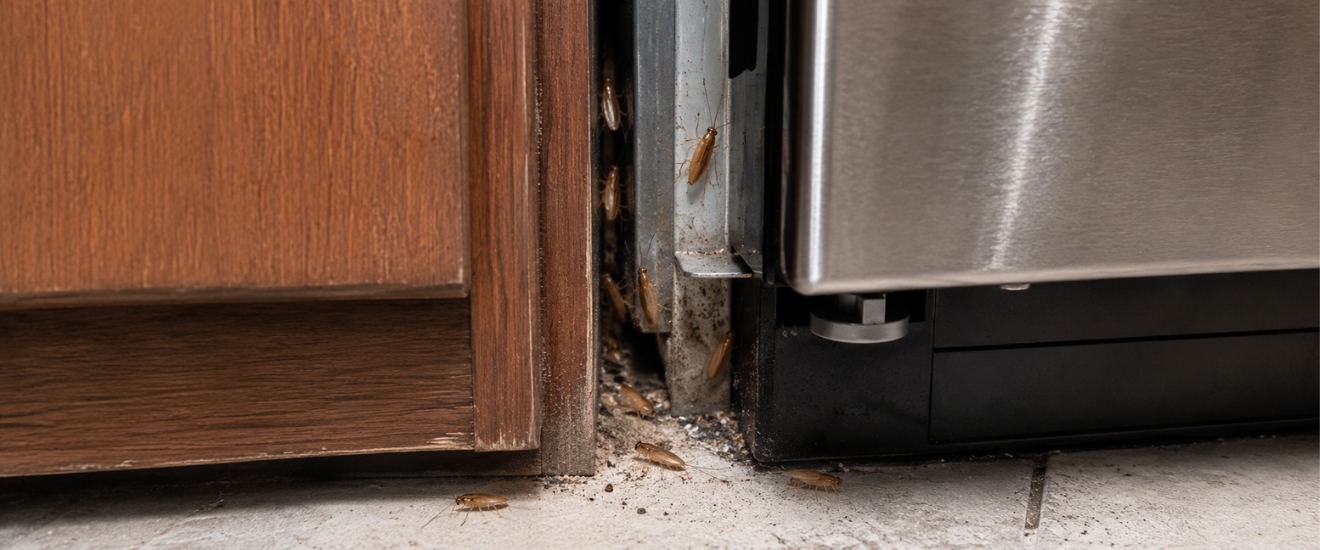
Spotting a German cockroach in the kitchen rarely tells you where the problem actually is. The one crossing a countertop may have emerged from the narrow gap beside the dishwasher, while others remain behind the refrigerator, beneath the sink, or inside cabinet seams. Gilbert kitchens offer plenty of these overlooked spaces, where warmth, moisture, food residue, and shelter can exist within inches of one another.
For that reason, Gilbert cockroach control services often have a very different kitchen to inspect than the one homeowners see every day. The clean counters and open floors are only the visible layer; the more telling areas are behind, beneath, and between the fixtures that rarely move. A single sighting can disappear in seconds, while the conditions supporting dozens of unseen cockroaches can remain in the same few square feet of kitchen space.
The Kitchen Hiding Spots That Keep German Cockroaches Out of Sight
A kitchen provides German cockroaches with an unusual number of places where food, water, warmth, and shelter exist close together. Many of these locations are concealed by fixtures or appliances, allowing cockroaches to remain nearby without regularly crossing open surfaces.
Behind and Under the Refrigerator
The refrigerator can provide German cockroaches with warmth, darkness, and an area that may remain undisturbed for months at a time. Crumbs and other food debris can accumulate beneath the appliance, while condensation and nearby water lines may provide moisture. Narrow spaces around the motor, wall, flooring, and surrounding cabinetry give cockroaches places to retreat after feeding, which means repeated sightings near the refrigerator can point to activity much closer than homeowners realize.
In the Gaps Around the Dishwasher
Dishwashers can create favorable conditions because moisture, warmth, plumbing, and concealed installation spaces are concentrated in one area. German cockroaches may occupy gaps along the sides or underneath the unit and stay near plumbing connections where small amounts of moisture are available. Since these spaces cannot be inspected during routine kitchen cleaning, cockroaches can remain established around the appliance even when its visible surfaces and surrounding floor are kept clean.
Beneath the Kitchen Sink
The cabinet below the sink can become a particularly attractive location when leaking connections, condensation, or everyday water use keeps the area damp. Openings around drainpipes and supply lines provide additional shelter and may connect the cabinet with less accessible spaces behind walls. German cockroaches found beneath the sink may therefore be using the cabinet for food or water while retreating into plumbing gaps and nearby crevices when the kitchen becomes active.
Inside Cabinet Seams, Hinges, and Drawer Spaces
Kitchen cabinetry contains many narrow spaces that are easy to overlook, including joints between panels, hinge areas, drawer tracks, corners, and gaps where cabinets meet walls or countertops. The flattened bodies of German cockroaches allow them to squeeze into these protected areas and remain close to stored food without sitting on an exposed shelf. Cleaning the interior of a cabinet can remove crumbs and residue, but it may not disturb cockroaches concealed within the cabinet’s structural seams.
Behind Stoves and Cooking Appliances
Areas behind and beneath stoves can offer both warmth and access to food residue, particularly when grease, crumbs, or spills have worked their way into spaces that are difficult to clean. Because large cooking appliances are rarely moved, these locations can remain relatively quiet even in a kitchen that is used every day. German cockroaches can hide near the appliance during periods of household activity and move toward nearby food or water once the room becomes darker and less disturbed.
Around Pipes and Utility Openings
The openings created for water lines, drainpipes, electrical connections, and other utilities are not always tightly sealed, leaving small gaps that German cockroaches can exploit. These openings can function as both hiding areas and protected travel routes between cabinets, appliance spaces, and wall voids. A cockroach that disappears beneath the sink or behind an appliance may therefore be moving farther into the structure rather than simply hiding immediately behind the surface where it was last seen.
Along Counter, Baseboard, and Wall Gaps
Small separations where countertops meet walls, cabinets meet flooring, or baseboards pull away from surrounding surfaces can provide enough room for German cockroaches to conceal themselves. These gaps are particularly useful when they are close to food preparation areas, sinks, trash containers, or appliances because cockroaches do not need to travel far from shelter to reach resources. Their size makes these spaces easy for homeowners to overlook during routine cleaning or a quick visual inspection.
What Keeps Most of a German Cockroach Problem Hidden
The number of cockroaches you physically see is not a reliable way to estimate the extent of an infestation. Their activity patterns, preferred hiding behavior, and ability to reproduce in protected spaces can keep a substantial portion of the population outside your normal field of view.
They Are More Active When Your Kitchen Is Quiet
German cockroaches tend to leave their hiding places when there is less light, movement, and disturbance, which often corresponds with the hours when household members are asleep. They can search for food and water during these quieter periods and retreat before the kitchen becomes busy again. This timing explains how someone can use the same kitchen throughout the day and see very little activity while cockroaches continue moving through the space during the night.
They Spend Much of Their Time Inside Tight Harborages
German cockroaches are well suited to living inside narrow cracks and crevices rather than remaining exposed on counters or floors. When a harborage is located close to food and moisture, the insects may need to venture only a short distance before returning to cover. This means a population can remain concentrated behind an appliance, inside cabinetry, or near plumbing while only a fraction of those cockroaches regularly cross areas where homeowners are likely to notice them.
Kitchens Contain More Concealed Space Than They Appear To
Finished cabinets, counters, appliances, and walls can make a kitchen look relatively sealed, but numerous hidden spaces exist behind those visible surfaces. Appliance cavities, cabinet joints, plumbing penetrations, utility openings, wall gaps, and structural seams create an interconnected environment that homeowners cannot easily inspect. German cockroaches can take advantage of these protected spaces to stay near the resources in the kitchen without spending much time in the open.
Egg Cases and Young Cockroaches Can Stay Out of View
An infestation is not made up only of the adult cockroaches that are easiest to notice. German cockroach populations can include immature nymphs and egg cases associated with protected harborages, leaving important parts of the infestation concealed even after several visible adults have been killed. This is one reason sightings can decrease temporarily and then appear again: removing the cockroaches encountered on exposed surfaces does not necessarily address every life stage present in hidden areas.
Killing Individual Cockroaches Does Not Reveal the Harborage
Spraying the cockroach running across the floor addresses the insect in front of you, but it does not show where that cockroach was hiding beforehand or how many others remain there. When the primary activity is behind the refrigerator, around the dishwasher, beneath cabinetry, or near plumbing, focusing on exposed surfaces can miss the places where cockroaches spend most of their time. Finding those harborages provides a much clearer picture of why sightings keep occurring.
Daytime Activity Can Be an Important Warning Sign
Because German cockroaches generally prefer protected areas and quieter periods, repeated sightings during the day can deserve closer attention. Increased competition for food, water, or shelter may cause some cockroaches to move beyond their usual harborages, while a larger or more dispersed infestation can make encounters more frequent. A daytime cockroach does not reveal the exact population size by itself, but recurring daytime sightings provide a strong reason to inspect beyond the visible kitchen surfaces.
Find the Source Instead of Chasing Individual Cockroaches
The roach that slips under the refrigerator when the light comes on is easy to focus on, but the more important question is what is happening after it disappears. A Gilbert kitchen can give cockroaches plenty of concealed space behind appliances, beneath sinks, along cabinet seams, and around plumbing. These tucked-away areas can keep an infestation active while only an occasional roach crosses a surface where someone notices it.
That hidden activity is exactly what Veterans Choice Pest Solutions looks for. Our experienced technicians know the kitchen areas German cockroaches favor and the less-obvious signs that can point to activity beyond the roaches already spotted. Reach out to us today for a free pest control quote and get answers about what is hiding in your Gilbert kitchen instead of waiting for the next cockroach to give itself away.