
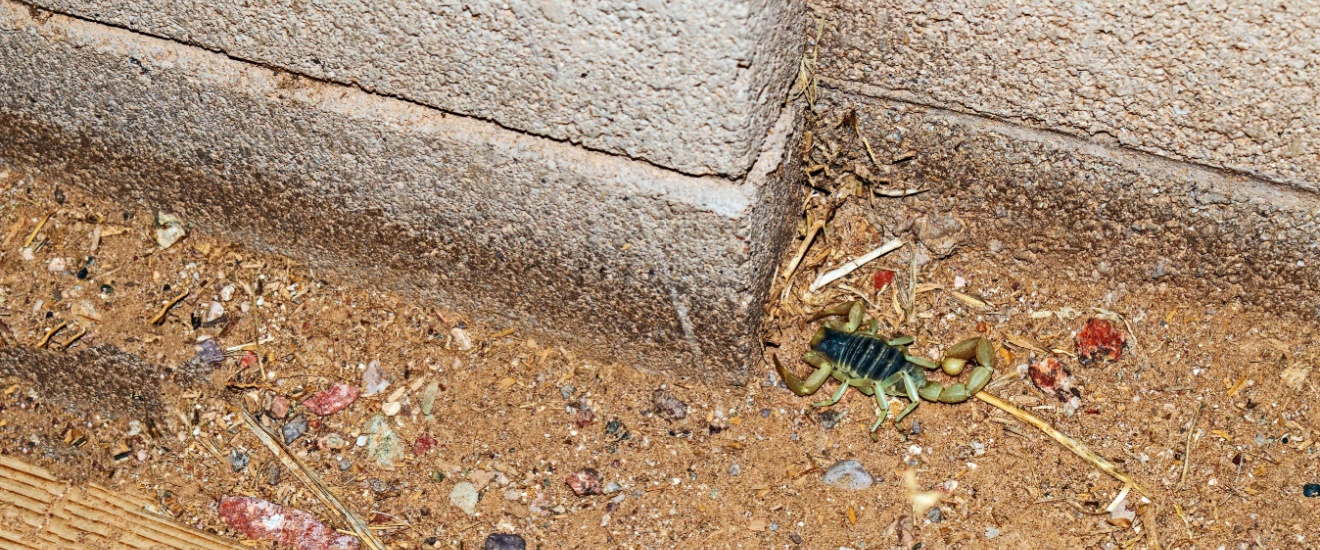
In Gilbert and across the East Valley, block walls are nearly universal—and that’s exactly what makes them such a problem. These walls aren’t just property dividers; they’re one of the bark scorpion’s favorite hiding places. With hollow cores, cracks, and shaded gaps, block walls give scorpions the perfect environment to nest, travel, and spread. Because most homes in the area have them, infestations can quickly become widespread. For homeowners, effective Gilbert scorpion control means recognizing that the fight often begins inside those walls.
Hollow Spaces Create Hidden Shelter
Block walls are built with hollow cores that run the entire length of the structure. These cavities stay cooler than exposed surfaces, creating a stable microclimate where scorpions can retreat during the day. Unlike open soil or landscaping rocks, the interior of a block wall shields them from direct sunlight and extreme temperatures, allowing them to conserve energy and remain active year‑round. This hidden shelter is one of the main reasons scorpions thrive in suburban neighborhoods, even when outdoor conditions seem inhospitable.
The problem is compounded by the fact that these hollow spaces are interconnected. A single scorpion can move freely through the length of a wall, finding multiple hiding spots without ever being exposed. For homeowners, this means infestations are rarely isolated to one corner or section—the entire wall can act as a scorpion habitat. Because these shelters are built into the design of nearly every Gilbert home, scorpions have endless opportunities to establish themselves, making detection and control far more difficult.
Moisture Retention Fuels Survival
Water is scarce in Arizona’s desert climate, but block walls often trap and hold moisture. Irrigation systems, monsoon rains, and damp soil seep into cracks and cavities, creating humid pockets inside the walls. These damp zones allow scorpions to survive longer and reproduce more successfully than they could in dry, exposed environments. Even small amounts of retained moisture can sustain scorpions for weeks, giving them a survival advantage over other desert pests.
For Gilbert homeowners, this means block walls act like reservoirs that sustain scorpion populations year‑round. Even when surrounding soil dries out, the walls continue to provide the moisture scorpions need. This hidden water source makes infestations more persistent and explains why scorpions remain active around homes long after the rain has stopped. It also means that routine irrigation or poorly sealed walls can unintentionally create ideal breeding conditions right along the property line.
Cracks and Crevices Provide Safe Harborage
The narrow gaps in block walls are nearly impossible for predators to reach. Birds, lizards, and other natural enemies can’t access these tight spaces, leaving scorpions free to hide, rest, and reproduce without disturbance. This protection makes block walls one of the safest harborage sites available in suburban neighborhoods, giving scorpions a secure base from which to expand.
Because scorpions can remain undisturbed inside these crevices, populations grow steadily over time. Homeowners may see only a few scorpions at night, unaware that dozens more are concealed within the walls. This hidden harborage is one of the main reasons infestations feel relentless—the source is protected and difficult to treat without professional help. Without targeted treatment, these cracks continue to serve as breeding grounds, fueling infestations that spread into living spaces.
Block Walls Attract Insects—Scorpions’ Food Source
Landscaping along block walls draws ants, crickets, and roaches, which scorpions feed on. The walls essentially serve as hunting corridors, keeping food sources close to their shelter. With prey readily available, scorpions don’t have to travel far, making the walls both a hiding place and a feeding ground. This abundance of food means scorpions can thrive in Gilbert neighborhoods even when natural desert prey is scarce.
The combination of shelter and food in one location makes block walls ideal for sustaining large populations. For homeowners, this explains why scorpions often appear near patios, garages, and kitchens—they’re following insect trails that begin along the walls. The presence of insects around block walls not only sustains scorpions but also encourages them to remain close to homes, increasing the likelihood of encounters indoors.
Pathways Into Homes
Block walls connect directly to garages, patios, and rooflines. Scorpions use these structures like highways, moving from the perimeter into living spaces with little resistance. Once inside, they can access attics, storage areas, and even bedrooms, creating serious concerns for families. This direct access makes infestations harder to control and explains why homeowners often find scorpions in unexpected places.
Because block walls are part of the neighborhood design, scorpions can move seamlessly from outdoor hiding spots into indoor environments. Without targeted treatment, the walls continue to act as entry points, allowing new scorpions to replace those removed. This constant movement between outdoor and indoor spaces makes infestations feel never‑ending, as scorpions exploit the structural connections built into every home.
Widespread Use Across Gilbert Neighborhoods
Most East Valley homes have block walls, which means scorpions can spread from property to property without interruption. This widespread design amplifies infestations, turning what might have been an isolated issue into a community‑wide concern. Even if one homeowner treats their property, scorpions can migrate from neighboring walls and re‑establish activity.
For Gilbert families, the prevalence of block walls means scorpion problems are rarely confined to a single yard. This interconnected design makes infestations harder to contain and highlights the need for professional scorpion control strategies that address the walls themselves. Without coordinated treatment, scorpions will continue to exploit the widespread presence of block walls, ensuring infestations remain a persistent challenge across entire neighborhoods.
How to Stop Scorpions From Using Block Walls as a Home Base
Block walls may define the look of Gilbert neighborhoods, but they don’t have to define the scorpion problem. These structures give bark scorpions everything they need—shelter, moisture, food, and pathways indoors. When left untreated, they become permanent strongholds that allow infestations to grow and spread from one property to the next. Homeowners can slow activity by trimming vegetation, sealing obvious gaps, and reducing irrigation near walls, but these steps rarely eliminate the issue. Scorpions are built to endure, and unless the walls themselves are addressed, they continue to serve as the foundation for infestations.
Veterans Choice Pest Solutions has worked across Gilbert communities where block walls act as the launch point for scorpion activity, and our treatments are designed to stop that cycle before it reaches your home. Through detailed inspections and applications tailored to Arizona properties, we target the hidden spaces inside walls where scorpions nest and travel. By cutting off their shelter and pathways, we prevent infestations from spreading indoors and give families lasting relief. As a veteran‑owned company, we bring discipline, integrity, and proven strategies to every property we protect.
Reach out to us today to schedule a comprehensive inspection and take away the advantage scorpions gain from block walls.